
Keep distinct collection types in the catalogue
Atlanta History Center maintains collections spanning historical objects, archival materials, plants and historic buildings. The exercise is fictional and intended only to demonstrate digital skills.
Enter invented heritage records by supplied collection type and preserve a record with unknown classification. Use anonymous mock codes; do not copy actual objects, estate details, plant identities, archive records or ownership information.
Classify a fictional mixed collection
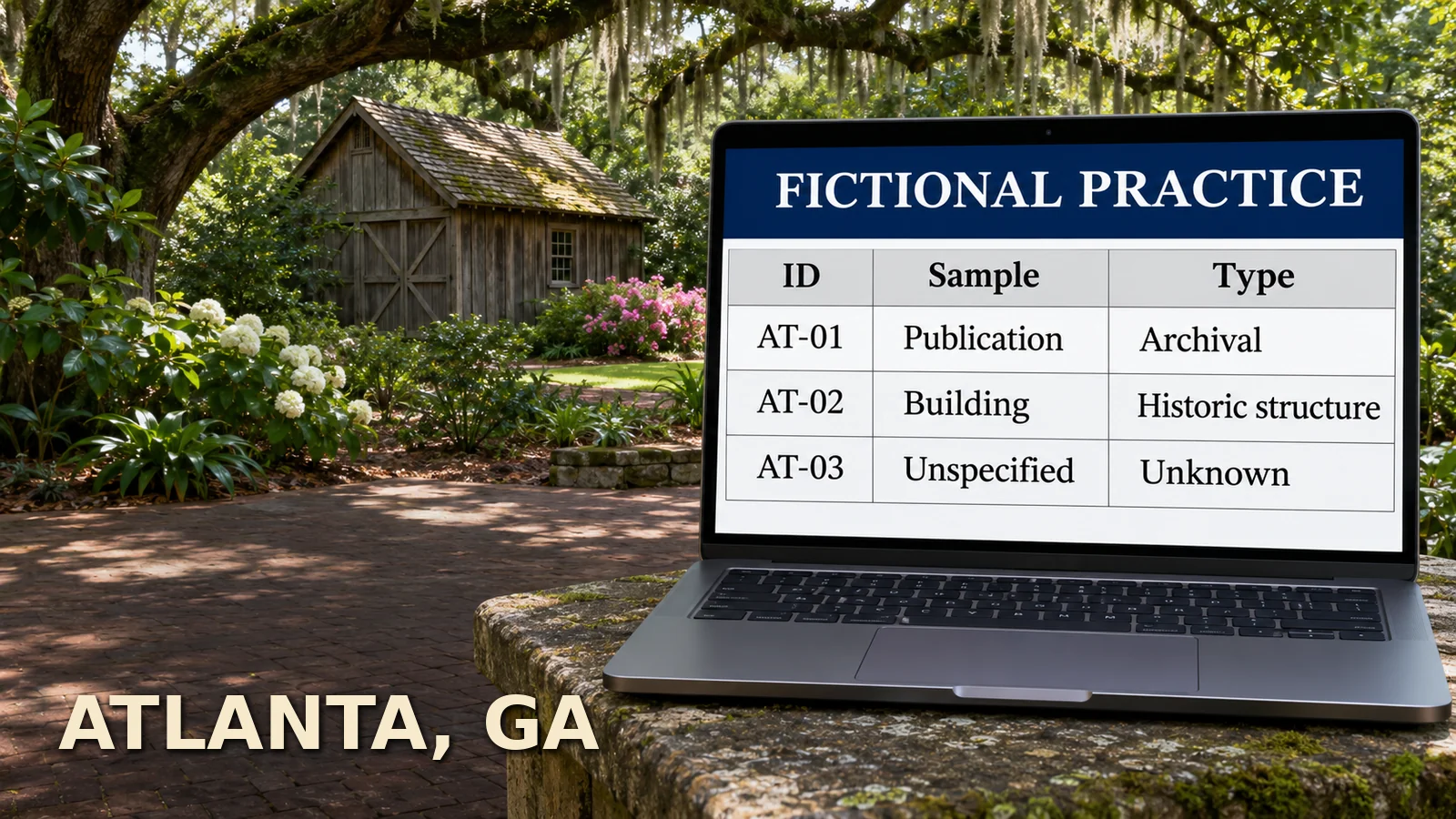
Fictional input: AT-01 mock publication, archival; AT-02 mock generic building, historic structure; AT-03 item type absent.
Expected output: AT-01 archival, AT-02 historic structure, AT-03 type unknown. Do not classify AT-03 by the neighbouring entries.
Atlanta collections: distinguish archival holdings and living collections
The Atlanta History Center’s collection search describes archival materials, museum objects and living collections. Its organizational history explains how the institution developed from an archival society to encompass gardens, historic houses and museum exhibitions. These categories represent different kinds of holdings, not interchangeable labels for individual entries.
The public descriptions inspire a fictional cataloguing task; they do not establish an appointment, contract, actual collection assignment or regional vacancy. Use anonymous invented records and avoid real object identifiers, ownership information, estate details or plant identities.
Create independent category and evidence fields
Extend the original AT-01 mock publication (archival), AT-02 generic building (historic structure) and AT-03 unidentified item. Add columns for record ID, supplied description, stated category, evidence reference, review state and proposed change. Give AT-01 imaginary source AT-S1 and AT-02 AT-S2. AT-03 has neither category nor evidence reference.
Record AT-01 as archival and AT-02 as historic structure. Keep AT-03 unknown rather than classifying it from its neighbor. Do not invent a source identifier simply to fill a spreadsheet field; the missing information is itself important.
Resolve one ambiguity without changing unrelated records
A fictional note AT-R01 describes AT-03 as a generic museum object and links synthetic reference AT-S3, but also proposes changing AT-01’s category without explaining why. Record the confirmed category and reference for AT-03, preserving its earlier unknown value in the original version. Keep AT-01 archival and flag the unsupported proposal.
Check the final table: AT-01 archival, AT-02 historic structure, AT-03 museum object. The last revision changed only a confirmed entry; a proposed correction without support remains separate. This practice demonstrates how reviewers avoid turning uncertain labels into apparent facts.
Check which current roles match structured-record skills
A data-management task may require maintaining categories, checking source fields and documenting corrections. This Atlanta guide is neutral, not a vacancy. Consult actual United States vacancy descriptions for duties, language, availability, equipment, certificates if specified and location eligibility.
Application and recruitment are free: no application, joining, placement or exam fee and no security deposit. These sample records do not provide paid assignments or promise daily income. If recruited, verify genuine written terms and USD remuneration.
Avoid fake catalogue jobs and task deposits
The Federal Trade Commission describes online task scams where unexpected messages advertise simple work and demand deposits to continue or withdraw earnings. A genuine local organization’s name or plausible collection description cannot verify an unsolicited offer. Check the employer’s official website independently and confirm the specific opening.
Decline requests to deposit money or cryptocurrency to access work or earnings. Do not share passwords, verification codes or banking credentials with an unverified person. If affected, contact your financial institution and report suspected fraud privately at ReportFraud.ftc.gov.
Atlanta classification practice questions
Can AT-03 be archival just because AT-01 is archival?
No. Use each record’s own supplied evidence.
What change does AT-R01 support?
AT-03 becomes museum object with reference AT-S3. AT-01’s unsupported proposal remains for review.
Does the collection website establish actual recruiting?
No. It supports local context only; consult genuine country vacancies.
Can access to practice require a deposit?
No. This fictional example is not paid work, and recruitment is free.
Exercise questions in Atlanta
Can one collection’s category establish an adjacent item’s type?
No. Classify each record using its own evidence.
Does recruitment require an advance payment from me?
No. Never pay any recruitment, application, joining or security deposit fee or money to unlock work or earnings.
Is this example a confirmed local job?
No. This locality guide explains remote-work skills through a fictional example. It is not a vacancy announcement or promise of project availability. Consult the official country job listings for current role requirements and eligibility before applying.
Prepare your application
Use anonymous mock codes; do not copy actual objects, estate details, plant identities, archive records or ownership information.
Spot job and recruitment scams
Apply through the official job opening. There is no application fee. Never share verification codes or send money to someone who contacts you unexpectedly. Save evidence and report suspected fraud to the Federal Trade Commission.
Recruitment is free. No application, joining, placement or exam fee. No security deposit. Never pay to obtain work, equipment or release earnings.